Darauf hat womöglich zumindest ein Teil der Menschheit ihr Leben lang drauf gewartet: ein Gitarren-Pedal, das bei allem, was mein reinhaut, Katzengeräusche von sich gibt. Für den Teil der Menschheit, der nicht darauf gewartet hat, kann das wahrscheinlich auch etwas nervig sein, aber geschenkt. Hier für $199,99.
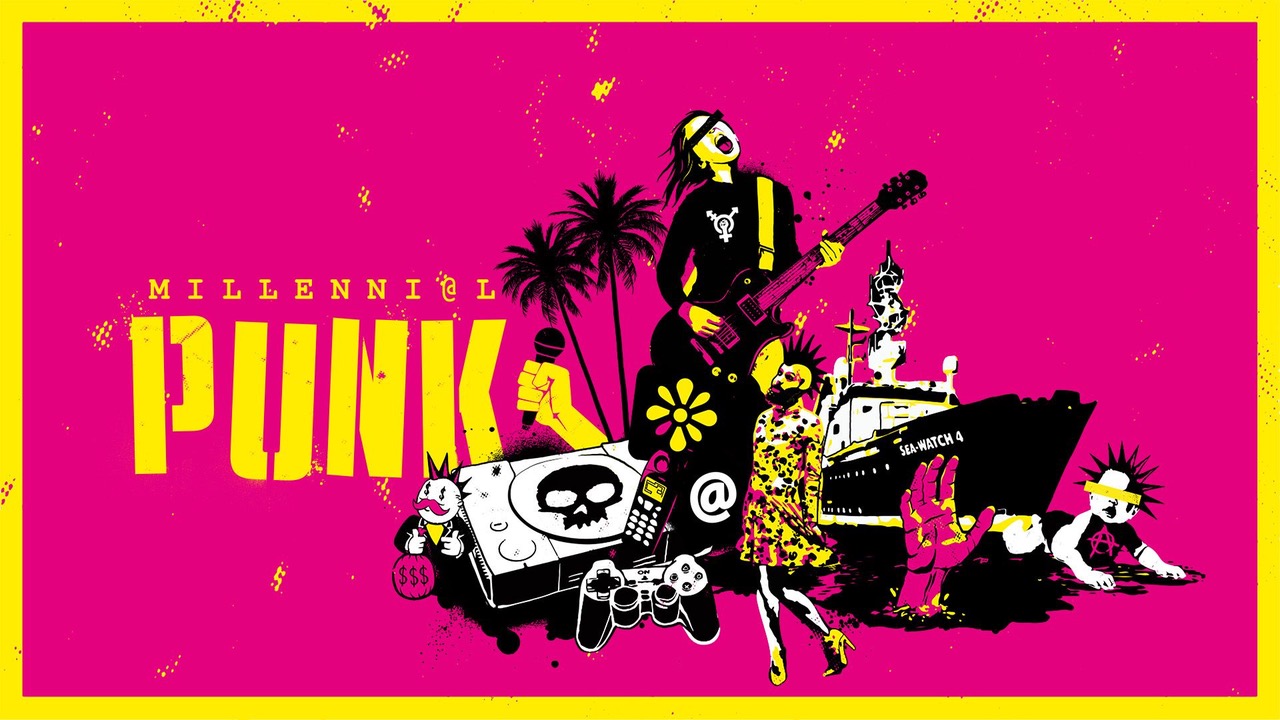
Deutscher Punk war Anfang 1990er Jahre genau mein Ding. Dann kam für mich erst HipHop, später Techno und der ist bis heute das Größte geblieben, was mir kulturell je passiert ist, weshalb ich für „Millennial Punk“ eigentlich auch schon etwas zu alt bin. Dennoch großartig gemachte Doku-Serie über über Punk in den 00er Jahren in der ARD-Mediathek, bei der auch ich noch dazu lernen konnte. Ist ja Wochenende und ihr habt eh nichts zu tun.
Die vierteilige Serie „Millennial Punk“ beweist in einer kurzweiligen Reise durch ein Vierteljahrhundert Deutschpunk das Gegenteil. Hier geht es im Gegensatz zu den meisten Dokumentationen nicht um die Ursprünge und das „Ende“ des klassischen Punkrock, sondern die Entwicklung der Subkultur in den Nullerjahren.
In der Doku Serie kommen fast siebzig Protagonist*innen der deutschen Punkszene zu Wort und erzählen chronistisch von ihren ersten Berührungspunkten mit der Subkultur und ihrer Vorstellung darüber, was das längst popkulturelle Phänomen Punkrock im neuen Jahrtausend für sie ausmacht. Es geht um das Internet, Politik und Aktivismus.
Der Komponist Dylan Sheridan hat einen MIDI-Controller und eine Farbrolle zusammengebracht, sodass beim Auf- und Abfahren der Rolle an der Wand gesampelte Töne abgespielt werden. Immer wieder faszinierend, was Leute so mit ihrer Zeit anstellen.
Ein normales analoges Klavier, das von einer computergesteuerten mechanischen Maschine gespielt wird, und es klingt, als würde jemand sprechen. Deus Cantando ist das Werk des Künstlers Peter Ablinger. Er nahm einen deutschen Schüler auf, der einen Text rezitierte, und komponierte dann eine Melodie für den mechanischen Spieler, die wie die Rezitation klang. Jason Nobles darüber:
This is not digital manipulation, nor a digitally programmed piano like a Disklavier. This is a normal, acoustic piano, any old piano. The mechanism performing it consists of 88 electronically controlled, mechanical “fingers,” synchronized with superhuman speed and accuracy to replicate the spectral content of a child’s voice. Watching the above-linked video, it may seem that the speech is completely intelligible, but this is partially an illusion. The visual prompt of the words on the screen are an essential cue: take them away, and it becomes much harder to understand the words. But it is still remarkable that the auditory system is able to group discrete notes from a piano into such a close approximation of a continuous human voice, and that Ablinger was able to do this so convincingly using a conventional instrument (albeit, played robotically).
Kitsault im Norden von British Columbia ist vielleicht eine der am besten erhaltenen Geisterstädte der heutigen Zeit. Sie ist in nahezu perfektem Zustand und der Strom ist noch eingeschaltet.
This area of northern British Columbia was long known for its rich mineral deposits.In 1979 it was molybdenum (also known as ‚Moly‘) that was in high demand.Molybdenum is used in steel alloys to increase strength, hardness, electrical conductivity and resistance to corrosion and wear.
Between 1967 and 1972, a total of 10 million tons of molly had already been mined but the prices in the early 70s were trending down.AMAX of Canada Ltd. purchased the site in 1973.By around 1979 the Moly market was on the rise with news that many of the known deposits in western Canada and the United States were depleted.
In 1979 The mine was reopened and construction of the town started.The plan was to make Kitsault a place that would attract workers to remote northern BC. They would build a community that would house around 1,200 residents. By 1980, the first families would start moving in. Built was a community of around 100 single family homes and duplexes and seven apartment buildings with around 200 suites. There was a modern hospital, mall, restaurants, bank, theatre, two recreation centres, a school and more. Everything a modern 1980s community would want and need. Just after families had settled in and the price of Moly collapsed due to the 1982 recession and the moly byproduct production from copper mines, the mine was closed. The last residents were gone by 1983. Only 18 months of full operation to closure. For the next 22 years the town sat vacant and untouched like a time capsule. Caretakers were hired to maintain the town during this time. In 2005 an American businessman bought the town and has spent millions in renovations keeping the town preserved with a vision for future development and projects. Today most of the town still remains as it was from 1983.
Im Rahmen ihrer fortlaufenden „Was wäre wenn?“-Serie erklären uns xkcd, wann die letzte künstliche Lichtquelle erlöschen würde, wenn die Menschheit von der Erde verschwinden würde. Die ersten, die verschwinden, sind die offensichtlichsten. Wie immer die Antworten auf die wichtigen Fragen.
Midnight Oil, die ich als junger Mensch sehr liebte und deren Musik lange begleitete, haben eine eigene Doku bekommen. Mal gucken, ob es die ab Juli dann auch in deutsche Kinos schafft. Würde ich mir ansehen.
Contrary. Passionate. Outspoken. Over 45 years Midnight Oil helped shape modern Australia.
This is their trailblazing story for the first time on film.
Midnight Oil: The Hardest Line is the definitive story of the seminal Australian rock group tracing their origins from the politically charged atmosphere of the 1970s to their rise as global icons.
Midnight Oil: The Hardest Line, coming only to cinemas from July 4.
Diese Website verwendet Cookies, damit wir dir die bestmögliche Benutzererfahrung bieten können. Cookie-Informationen werden in deinem Browser gespeichert und führen Funktionen aus, wie das Wiedererkennen von dir, wenn du auf unsere Website zurückkehrst, und hilft unserem Team zu verstehen, welche Abschnitte der Website für dich am interessantesten und nützlichsten sind.
Unbedingt notwendige Cookies
Unbedingt notwendige Cookies sollten jederzeit aktiviert sein, damit wir deine Einstellungen für die Cookie-Einstellungen speichern können.
Wenn du diesen Cookie deaktivierst, können wir die Einstellungen nicht speichern. Dies bedeutet, dass du jedes Mal, wenn du diese Website besuchst, die Cookies erneut aktivieren oder deaktivieren musst.